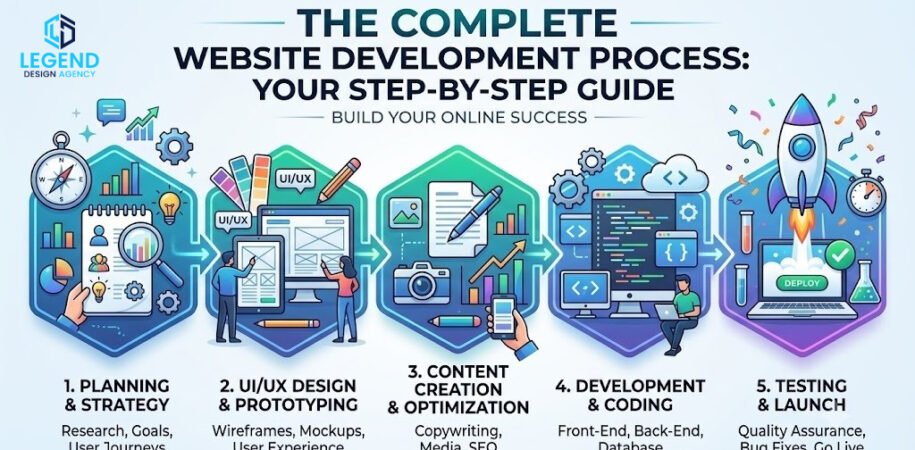

The Complete Website Development Process: Your Step-by-Step Guide
Building a successful website requires careful planning and execution. The website development process involves multiple stages working together seamlessly. At Legend Design Agency, we’ve refined our approach over 32+ years of combined experience.
Understanding each phase helps you make informed decisions. You’ll know what to expect at every step. This comprehensive guide walks you through the entire journey. From initial concept to final launch, we cover everything you need to know.
What is the Website Development Process?
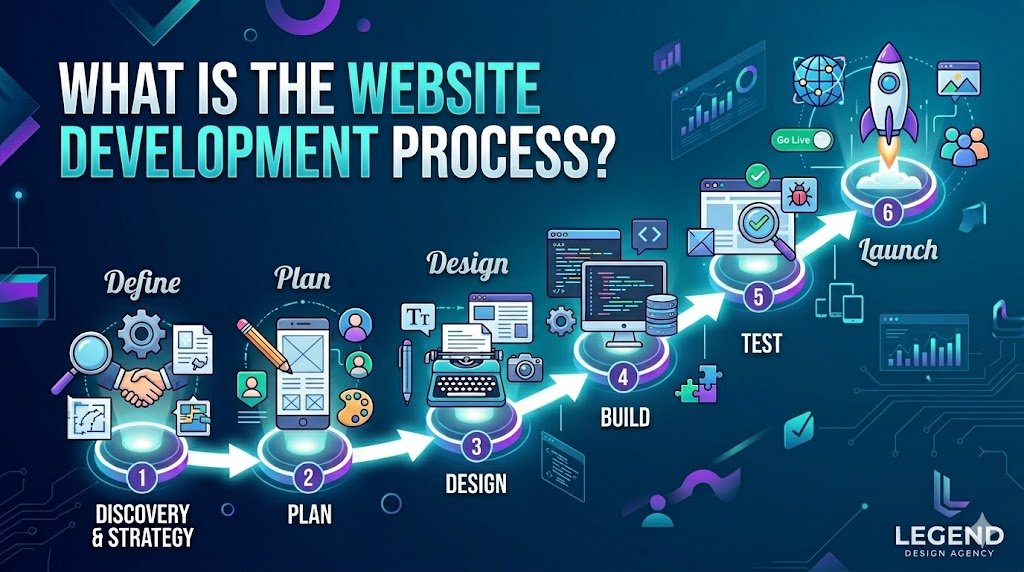
The website development process is a structured approach to creating websites. It includes planning, designing, developing, testing, and launching your site. Each stage builds on the previous one. This systematic method ensures quality results and reduces costly mistakes.
Professional web development follows proven methodologies. These frameworks deliver consistent, high-quality outcomes. The process typically spans 6-12 weeks for standard projects. Complex websites may require 12-16 weeks or longer.
At its core, the website development process balances three critical elements. First, it must meet your business objectives. Second, it needs to serve your target audience effectively. Third, it should leverage modern technology appropriately.
Phase 1 – Discovery and Planning (Web Development Stages Begin)
Every successful website starts with thorough discovery. This initial phase sets the foundation for everything that follows. You’ll define project goals, identify target audiences, and establish success metrics.
During discovery, we ask critical questions about your business. What problems does your website need to solve? Who are your primary competitors? What makes your business unique? These insights shape the entire website development process.
Key Activities in Discovery:
Business Analysis:
We examine your company’s mission, values, and market position. This helps us understand your unique selling propositions. We identify opportunities for digital differentiation.
Audience Research:
Understanding your target customers is essential. We analyze demographics, behaviors, and preferences. This research guides design decisions and feature prioritization.
Competitor Analysis:
We review competitor websites to identify industry standards. This reveals opportunities to stand out. We learn from both successes and failures in your market.
Goals Definition:
Clear objectives drive project success. We establish specific, measurable goals for your website. These might include lead generation, sales, or brand awareness targets.
Technical Requirements:
We document necessary features and functionality. This includes content management needs, integrations, and performance requirements. Technical planning prevents scope creep later.
Deliverables from the Discovery Phase:
You’ll receive comprehensive project documentation at this stage. The discovery phase produces a detailed project brief. This document includes target audience profiles, competitive analysis reports, and technical specifications.
We also create a project timeline with key milestones. Budget allocation gets finalized during this phase. All stakeholders align on expectations before moving forward.
Phase 2 – Information Architecture and Wireframing
Information architecture determines how content organizes on your site. This phase focuses on structure rather than visual design. We map user journeys and create logical navigation systems.
Wireframes are simple, grayscale layouts showing page structure. They illustrate where elements appear without visual styling. This approach lets us focus on functionality and user experience.
Creating Effective Site Structure:
Sitemap Development:
We outline every page and how they connect. The sitemap visualizes your website’s hierarchy. This ensures logical organization and easy navigation.
User Flow Mapping:
We chart the paths users take through your site. This identifies potential friction points. User flow optimization improves conversion rates significantly.
Wireframe Creation:
Low-fidelity sketches show page layouts. These wireframes indicate content placement and functionality. They’re easy to revise based on feedback.
Content Strategy:
We plan what content each page requires. This includes text, images, videos, and interactive elements. Content planning ensures consistency across your site.
Why This Phase Matters:
Wireframing prevents expensive design revisions later. It’s much easier to modify structure now than after visual design. Stakeholders can provide feedback on functionality without visual distractions.
Testing usability at the wireframe stage saves time and money. We identify navigation issues early in the custom website development process. This user-first approach creates better final products.
Phase 3 – Visual Design and Branding
Visual design brings your website to life with color, typography, and imagery. This phase transforms wireframes into beautiful, branded interfaces. Design should reflect your company’s personality and values.
Our design team creates mockups showing exactly how pages will look. These high-fidelity designs include all visual elements. You’ll see your website before any code gets written.
Design Elements We Focus On:
Color Psychology:
We select colors that evoke appropriate emotions. Color choices influence user behavior and brand perception. Strategic color use strengthens your visual identity.
Typography:
Font selection impacts readability and brand voice. We choose typefaces that align with your message. Proper typography hierarchy guides users through content.
Imagery and Graphics:
Visual content captures attention and communicates quickly. We source or create images that support your message. Custom graphics differentiate your brand from competitors.
Responsive Design:
Your site must work perfectly on all devices. We design mobile, tablet, and desktop versions simultaneously. This mobile-first approach ensures optimal experiences everywhere.
Brand Consistency:
Every design element reinforces your brand identity. We follow your existing brand guidelines or help create new ones. Consistent branding builds trust and recognition.
Design Review Process:
You’ll review design mockups and provide feedback. We refine designs based on your input. This collaborative approach ensures the final design exceeds expectations.
Most projects go through 2-3 design revision rounds. Clear communication during this phase prevents misunderstandings. We finalize all visual elements before development begins.
Phase 4 – Development and Coding (Core Custom Website Development)
Development transforms approved designs into functional websites. Our developers write clean, efficient code following best practices. This technical phase brings your vision to reality.
Frontend Development:
Frontend developers build what users see and interact with. They convert design files into HTML, CSS, and JavaScript. The result is a pixel-perfect implementation of approved designs.
Responsive Implementation:
Code adapts seamlessly to different screen sizes. We test on various devices and browsers. Cross-browser compatibility ensures consistent experiences.
Performance Optimization:
Fast loading speeds improve user experience and SEO. We optimize images, minimize code, and implement caching. Performance directly impacts conversion rates.
Accessibility:
We build websites that everyone can use. This includes people with disabilities using assistive technologies. Accessible design is both ethical and legally important.
Backend Development:
Backend systems power your website’s functionality. This includes databases, server logic, and integrations. Backend development enables dynamic content and user interactions.
Content Management System:
We implement CMS platforms like WordPress or custom solutions. This lets you update content without technical knowledge. Training ensures you can manage your site confidently.
Database Design:
Structured data storage enables dynamic functionality. We design efficient database schemas for optimal performance. Proper data organization supports future scalability.
API Integrations:
We connect your website with third-party services. This might include payment processors, CRM systems, or marketing tools. Seamless integrations streamline business operations.
Security Implementation:
We build security into every layer of your site. This includes SSL certificates, secure authentication, and data encryption. Regular security updates protect against threats.
Phase 5 – Content Creation and Integration
Content gives your website purpose and value. This phase involves writing, editing, and implementing all text, images, and media. Quality content drives engagement and conversions.
Content Development:
SEO Copywriting:
We write content optimized for search engines and users. This includes keyword integration without stuffing. Well-written content ranks better and converts higher.
Visual Content:
Professional photography and videography enhance your message. We source stock images or arrange custom shoots. Video content increases engagement significantly.
Technical Content:
We create metadata, alt text, and schema markup. These technical elements improve SEO performance. Proper implementation helps search engines understand your content.
Content Management:
All content gets uploaded and formatted properly. We ensure consistency in tone, style, and formatting. Content organization makes future updates easy.
Internal linking strategies improve navigation and SEO. We connect related pages logically. This helps both users and search engines understand site structure.
Phase 6 – Testing and Quality Assurance
Thorough testing prevents embarrassing bugs and poor user experiences. We test every feature, page, and interaction systematically. Quality assurance ensures your site works flawlessly.
Testing Categories:
Functionality Testing:
We verify all features work as intended. Forms submit correctly, links go to the right places, and interactive elements respond properly.
Browser Testing:
Your site must work across all major browsers. We test Chrome, Firefox, Safari, and Edge. Consistent performance matters across platforms.
Device Testing:
We check real phones, tablets, and computers. Responsive design must work on actual devices, not just simulators. Real-world testing catches edge cases.
Performance Testing:
We measure page load speeds and optimize as needed. Fast sites rank better and convert higher. Performance testing identifies bottlenecks.
Security Testing:
We scan for vulnerabilities and implement fixes. Security is not optional in modern web development. Proper testing protects your business and users.
Accessibility Testing:
We ensure compliance with WCAG standards. Accessible sites serve more users and avoid legal issues. Testing with screen readers validates accessibility.
Phase 7 – Launch and Deployment
Launch day represents months of planning and work coming together. We deploy your website carefully to minimize risks. Proper launch procedures ensure smooth transitions.
Pre-Launch Checklist:
Final Reviews:
Stakeholders review the complete site one last time. This catches any final adjustments needed. Sign-off confirms readiness to launch.
Backup Creation:
We backup your current site if replacing an existing one. This provides a safety net if issues arise. Backups enable quick rollbacks if necessary.
DNS and Hosting:
We configure domain settings and hosting environments. Proper setup ensures your site is accessible immediately. Technical configuration must be perfect.
Analytics Setup:
We implement tracking codes for Google Analytics and other tools. This lets you measure performance from day one. Data collection starts immediately upon launch.
Launch Execution:
We deploy your site during low-traffic periods when possible. This minimizes impact if issues occur. Careful monitoring during launch catches problems quickly.
Post-launch monitoring continues for 48-72 hours. We watch for errors, performance issues, or unexpected behavior. Immediate support addresses any concerns.
Phase 8 – Post-Launch Support and Maintenance
Your website needs ongoing care after launch. Regular maintenance keeps it secure, fast, and effective. We provide comprehensive support packages for long-term success.
Ongoing Maintenance Includes:
Security Updates:
We apply patches and updates promptly. This protects against new vulnerabilities. Security is an ongoing process, not a one-time task.
Performance Monitoring:
We track site speed and uptime continuously. Performance optimization continues based on real user data. Fast sites keep users engaged.
Content Updates:
We can handle content changes as your business evolves. This keeps your site current and relevant. Fresh content also improves SEO.
Analytics Review:
We analyze traffic patterns and user behavior monthly. This data informs optimization decisions. Understanding your audience drives improvements.
Backups:
Regular automated backups protect your data. We maintain multiple backup versions for safety. Quick recovery options minimize downtime.
Why Choose Professional Custom Website Development
Professional development delivers better results than DIY approaches. Experienced developers avoid common pitfalls that cost time and money. Our custom web design services ensure your website exceeds expectations.
Benefits of Professional Development:
Expertise:
Years of experience inform better decisions at every stage. We’ve solved thousands of technical challenges. This knowledge accelerates your project.
Quality Assurance:
Professional standards ensure reliable, secure websites. We follow industry best practices religiously. Quality code performs better and lasts longer.
Time Savings:
Expert developers work faster than beginners. We anticipate issues before they become problems. Your site launches on schedule.
Scalability:
Professional architecture supports future growth. We build foundations that accommodate expansion. Your website evolves with your business.
Support:
Ongoing assistance keeps your site running smoothly. We’re here when you need help. Professional support prevents small issues from becoming big problems.
Common Web Development Stages: Challenges and Solutions
Understanding potential obstacles helps you prepare appropriately. Every website development process faces challenges. Professional developers know how to overcome them.
Challenge 1: Scope Creep
New feature requests often arise during development. These additions can delay timelines and increase costs. Clear initial planning minimizes scope creep.
Solution: We document all requirements during discovery. Change requests go through formal evaluation processes. This maintains project focus and budgets.
Challenge 2: Communication Gaps
Misunderstandings between clients and developers cause problems. Technical jargon confuses non-technical stakeholders. Poor communication leads to incorrect implementations.
Solution: We use plain language and visual examples. Regular check-ins ensure alignment throughout the process. Clear documentation prevents misunderstandings.
Challenge 3: Technology Changes
Web technologies evolve rapidly during long projects. New tools and frameworks emerge constantly. Staying current requires constant learning.
Solution: We balance cutting-edge technology with proven stability. Our team continuously updates their skills. We recommend technologies with strong long-term support.
Take the Next Step in Your Website Development Journey
Understanding the website development process empowers better decision-making. You now know what to expect at each stage. Professional development ensures your website meets business objectives and user needs.
Ready to start your project? Our experienced team at Legend Design Agency brings 32+ years of combined expertise. We’ve completed hundreds of successful websites across diverse industries. Your project receives the attention and skill it deserves.
Contact us today for a free consultation and project quote. We’ll discuss your goals, timeline, and budget openly. Let’s create a website that drives real business results.
Visit our custom web design services page to learn more about our comprehensive solutions. Transform your vision into a powerful online presence.